More than 500 years ago, the Inca Empire sacrificed children in religious ceremonies that sometimes involved psychoactive substances. Now, new analyses of eight mummies discovered in Peru and Argentina are shedding light on what these children consumed in the months leading up to their deaths.
Back in 2022, a study had already identified traces of coca and compounds associated with ayahuasca in two child mummies from Mount Ampato in Peru. Four years later, new research published in the scientific journal Antiquity expands the investigation to eight individuals, offering fresh insights into the role of drugs and how sacrificial rituals varied across the Inca Empire.
Coca, Alcohol and Harmine: What Did Researchers Find in the Inca Mummies?
An international research team led by archaeologist Dagmara Socha examined hair and nail samples from eight individuals—seven girls and one boy—whose remains had been recovered decades earlier from archaeological sites across the Andes.
The analyses detected cocaine and benzoylecgonine, one of its primary metabolites, in all six hair samples examined. These findings provide evidence of coca leaf consumption. Coca leaves naturally contain cocaine, along with other alkaloids, and have been used for centuries in traditional Andean practices. Chewing coca leaves, however, is not the same as using processed cocaine.
Researchers also found cocaethylene in individuals from Chuscha and Llullaillaco, both in Argentina. This compound forms in the body when cocaine and alcohol are present at the same time, suggesting that both substances had been consumed.
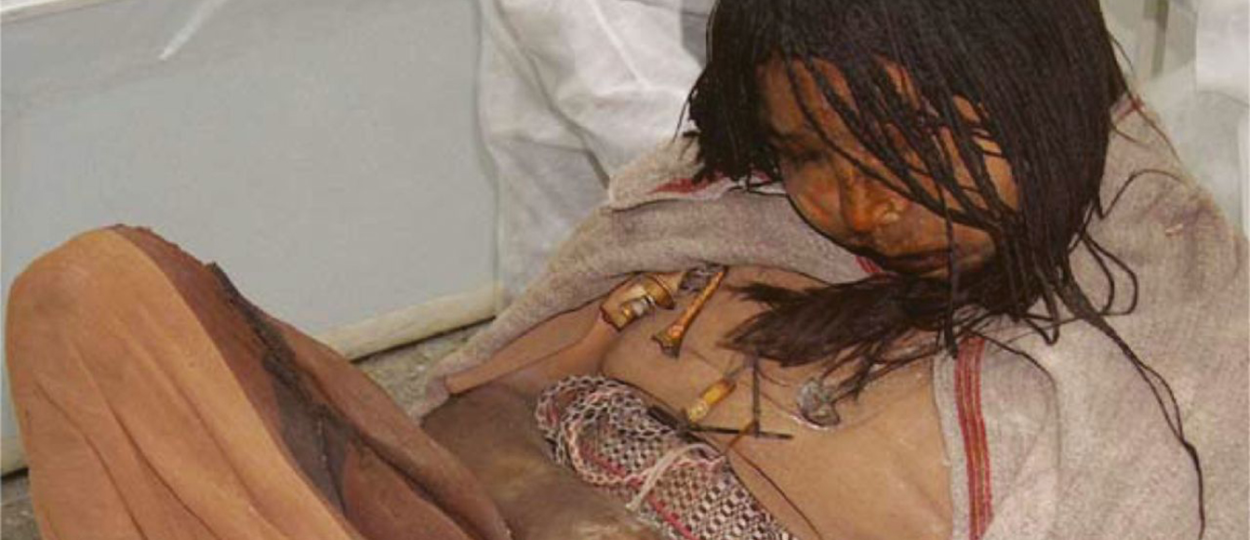
And what about ayahuasca? Small amounts of harmine were detected in a nail sample from Juanita, the famous Inca mummy known as the Lady of Ampato, discovered in Peru in 1995. Harmine is an alkaloid found in plants such as Banisteriopsis caapi, a vine commonly used to prepare the Amazonian brew.
However, the researchers found no traces of DMT, meaning they could not determine whether she had consumed a traditional ayahuasca preparation or another drink made from harmine-containing plants.
How Long Before Their Sacrifice Were the Children Given These Substances?
Hair works almost like a biological archive. As it grows, it incorporates certain substances circulating through the body. By analyzing individual segments, scientists can piece together an approximate timeline of drug consumption.
One of the most revealing cases involves an approximately eight-year-old girl sacrificed at Chuscha, Argentina. Researchers divided her hair into six segments, roughly corresponding to the final six months of her life. Concentrations of coca-related markers fluctuated throughout that period, dropping during the last month.
Interestingly, cocaethylene appeared only in the segment corresponding to that final month. This suggests that the combined consumption of coca and alcohol may have become part of the final stages of preparation for the sacrifice.
The researchers caution, however, that the condition of the preserved hair may have affected the concentrations detected. The findings can reveal general patterns, but they cannot establish exactly how much the girl consumed.
Mummies From Argentina Reveal Differences in Inca Sacrificial Rituals
The findings also suggest that these ceremonies did not necessarily follow the same playbook throughout the Inca Empire.
At Llullaillaco, where three sacrificed children were discovered at an altitude of more than 22,000 feet, earlier research had already documented the consumption of coca and chicha, a fermented alcoholic beverage.

At Chuscha, however, evidence of combined coca and alcohol consumption appeared only in the hair segment corresponding to the final month of life. New analytical techniques also detected evidence of coca consumption in remains from Chuscha and Sara Sara, in Peru, where previous tests had come back negative.
These differences may have reflected local traditions and the deities honored during each ceremony.
The researchers suggest that the substances administered may have depended, at least in part, on the characteristics attributed to particular deities, especially the apus, mountain spirits or deities revered throughout the Andes.
Why Did the Incas Give Psychoactive Substances to Children?
The sacrifices were part of a ritual known as capacocha, a religious and political ceremony in which the Incas offered children and young people to their gods. The victims were believed to serve as intermediaries between the human and divine worlds. These rituals could be performed in response to droughts, famines, or events that threatened the stability of the empire.
So why give the children drugs? Researchers believe certain substances may have helped them endure the long journeys to high-altitude shrines while also affecting their emotional state.
In particular, they suggest that harmine’s properties may have helped calm the children. Still, there is no conclusive evidence that this was the intended purpose.
Not all the bodies were deliberately embalmed, as was customary in ancient Egypt. Many were naturally preserved by the extreme cold of the mountains where they were buried, as was the case with La Doncella (The Maiden), La Niña del Rayo (The Lightning Girl) and El Niño (The Boy), the three children discovered in 1999 on Mount Llullaillaco.
The study offers a closer look at just how complex Inca sacrificial rituals really were. Rather than following a single ritual formula, different communities appear to have used psychoactive substances in different ways, reflecting local beliefs and religious traditions. Five centuries later, the chemistry preserved in these children’s remains is helping researchers piece together the final chapters of their lives.