Governments think they can eliminate demand by banning supply. That misunderstands how gray and black markets operate.
Texas has spent decades prosecuting marijuana possession. Now, in Austin, someone carrying certain delta-8 THC gummies can face a felony charge, while possession of a small amount of marijuana is generally treated as a lower enforcement priority.
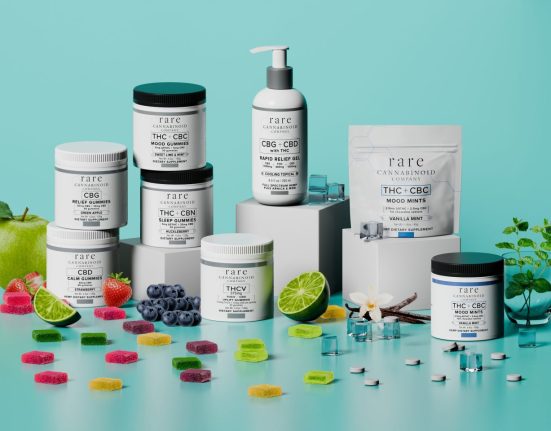
On July 31, the Texas Department of State Health Services reinstated its controlled-substance treatment of delta-8 THC following years of litigation. Possession can carry felony penalties, with the potential charge depending on the aggregate weight of the product. Under Texas law, that weight can include other ingredients in an edible, not just the THC itself.
Texas has closed off one part of the intoxicating hemp market. But if lawmakers think that means demand disappears, they haven’t been paying attention to how this works.
I made intoxicating hemp products for longer than Texas spent fighting delta-8 in court. In the time it took regulators to catch up to delta-8, the market had already moved through other cannabinoids and formulations. That’s the mismatch regulators seem to misunderstand. They regulate by the decade. This industry adapts by the season.
Let’s go back to where this all began.
Hemp, Cannabis, and the Gray Zone in Between
In 2018, Congress legalized hemp using one number: 0.3% delta-9 THC by dry weight. Not total THC, not THCA, and not every other potentially intoxicating cannabinoid found in cannabis. That distinction created opportunities the law did not fully anticipate.
Manufacturers optimized around it. Delta-8 THC can be produced through chemical conversion of hemp-derived CBD, produces intoxicating effects, and for years occupied a disputed legal space under the federal hemp definition. As states began restricting it, manufacturers explored other compounds, including HHC, while THCA flower gained attention as another way to operate within the federal delta-9 threshold. THCA converts to THC when heated, creating another complication for laws focused on the plant’s chemical composition before consumption.
Every door that closed redirected attention toward another one.
Congress has now changed the rules at the national level. Under legislation enacted in 2025 and subsequently amended, hemp-derived cannabinoid products containing cannabinoids that cannot naturally be produced by cannabis are scheduled to fall outside the federal definition of hemp beginning November 12, 2026.
Additional restrictions take effect December 11, including a total THC standard that accounts for THCA and a limit of 0.4 milligrams of combined total THC and certain other cannabinoids per container of finished product. The revised definition also excludes products containing naturally occurring cannabinoids that were synthesized or manufactured outside the plant.
Many intoxicating hemp gummies currently sold contain several milligrams of THC per piece, meaning much of today’s intoxicating hemp market could fall outside the revised federal definition. That’s a major change for an industry that developed around the original hemp definition. Whether it eliminates the market is another question.
Whack-a-Mole
But here’s the thing: no one I know is walking away from the category. Nobody read that bill and decided to go sell insurance instead. They’re asking their formulators what’s next.
Then there’s the question of who enforces any of it. A Congressional Research Service analysis noted that the FDA and DEA may lack the resources to broadly enforce prohibitions on intoxicating hemp products. That matters in a market estimated at close to $28 billion.
Government changes the rules. Industry changes the product. Government faces practical limits on enforcement. The cycle continues.
But let’s assume I’m wrong about all of it. Assume the ban works. Congratulations. You could force American manufacturers to shut down product lines and, in some cases, potentially close their doors. You risk losing jobs and economic activity tied to the category. And in doing so, you may also push out operators who say they want clear rules so they can build sustainable businesses for the long term.
But eliminating legal supply doesn’t necessarily eliminate demand. It can redirect that demand toward sellers operating outside meaningful oversight, where products may lack independent testing, accurate labeling, or contaminant controls.
The product doesn’t automatically get safer when the legal route disappears. That’s the problem with treating prohibition as the only tool available.
The Case for Standards, Not Prohibition
There’s a persistent myth that every hemp product is inherently sketchier simply because it was made outside a licensed cannabis facility. That’s too simple. Manufacturing standards, contaminant controls, accurate labeling, and independent testing all matter. If restrictions push consumers toward unregulated sellers, they may face greater uncertainty about potency, contaminants, and product quality.
That doesn’t mean the existing intoxicating hemp market is free of problems. The FDA has raised concerns about delta-8 products, including adverse events, manufacturing contaminants, inconsistent labeling, and products marketed in ways that put children at risk. Delta-8 THC products have not been evaluated or approved by the FDA for safe use.
Those concerns are real, and manufacturers should have to answer for them. That’s an argument for enforceable standards, not a reason to assume that removing legal access will eliminate unsafe products.
I understand why some licensed cannabis operators supported tighter restrictions. They spent years and real money building compliance systems while competing against hemp businesses that did not necessarily face the same requirements. Many also faced the burden of Section 280E, which has historically limited ordinary federal business deductions for businesses trafficking in controlled substances.
If I’d built a business around those costs, I’d be angry too. But the fix for an uneven playing field is leveling it, not burning down half the field.
None of this is really about cannabinoids alone, either. Lawmakers keep legislating molecules while the market responds to incentives. Those are two different games. Draw a bright line around something people want, and you don’t necessarily remove the demand. You may move the supply somewhere harder to see.
Texas spent years closing the delta-8 loophole. I’d be surprised if the market takes nearly as long to find the next one. Demand doesn’t disappear simply because a legislature redraws a definition. It gives entrepreneurs, and potentially illicit operators, a new problem to solve.

Regulate the Market That’s Already Here
If Congress wants safer products, better testing, and fewer bad actors, it should establish a workable regulatory framework for the market that’s already here: potency limits, packaging requirements, mandatory testing, contaminant standards, and rules that can actually be enforced.
That doesn’t mean every cannabinoid or product belongs on store shelves. It means regulation should address the risks products pose, rather than assuming that a ban will make the demand behind them disappear.
If Washington relies on prohibition without creating a workable alternative, we’ll likely be having this conversation again in a few years, just with a different cannabinoid on the label.
Contributed Content Disclaimer: This article is an opinion piece and reflects the personal views and experiences of the author. The opinions, interpretations, and conclusions expressed are solely those of the author and do not necessarily represent the views or editorial positions of High Times or its staff.